
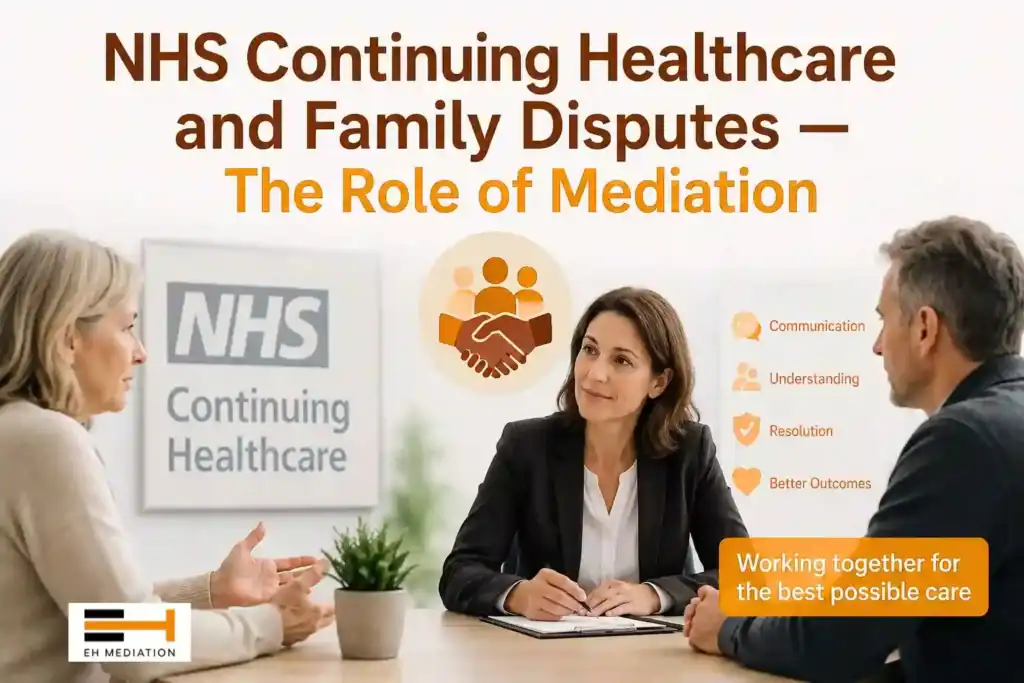
When someone you love needs ongoing care, it never feels simple. Families are usually already under pressure—trying to cope with worry, tiredness, and uncertainty—long before the NHS Continuing Healthcare (CHC) assessment even starts.
If disagreements then come up about eligibility, funding, or the right care arrangements, things can quickly become emotionally heavy and hard to manage for everyone involved.
In many cases, families feel unheard, while healthcare professionals may feel pressured by complex rules and limited resources. This is where mediation can make a real difference.
Rather than turning every disagreement into a formal complaint or lengthy appeal, mediation offers a calmer and more constructive way to resolve disputes connected to NHS Continuing Healthcare Yeovil.
What Is NHS Continuing Healthcare?
National Health Service Continuing Healthcare is a package of care fully funded by the NHS for adults who have what is described as a “primary health need.” The funding can cover care provided in a nursing home, hospice, care home, or even within a person’s own home.
The assessment process can feel overwhelming for many families, especially when they are already dealing with the stress of supporting a loved one. Decisions are usually made by looking at medical records, daily care needs, potential risks, and how complex a person’s overall health condition has become.
Because the criteria can feel complicated and open to interpretation, disputes are unfortunately quite common.

Why Do Family Disputes Happen During CHC Assessments?
For many families, the CHC process arrives during one of the most emotionally demanding periods of their lives. They may already be caring for an elderly parent, supporting someone with dementia, or managing a serious long-term illness.
Tensions can build up for many different reasons, especially when families are already under emotional pressure.
Different Views on Eligibility
It’s common for families to feel strongly that their loved one should qualify for NHS Continuing Healthcare Yeovil, only to find that the assessment team sees things differently. This can be upsetting and confusing, particularly when the Decision Support Tool (DST) uses medical language and scoring systems that are difficult for non-professionals to fully understand. As a result, families may feel frustrated, unheard, or unsure about how the final decision was reached.
Concerns About Care Standards
Many relatives worry their loved one is not getting the care or support they really need day to day. Some families come away feeling that important health concerns were missed, not properly understood, or simply not taken seriously during the assessment, which can leave them feeling anxious and ignored.
Communication Breakdowns
One of the biggest causes of conflict is poor communication. Families often feel excluded from discussions or believe decisions were made without properly listening to them.
At the same time, healthcare professionals may struggle to explain complicated funding rules in a way that families can easily follow.
Emotional Pressure Within Families
Disagreements do not always happen between families and the NHS Continuing Healthcare alone. Relatives themselves may clash over what type of care is best, where care should be provided, or how decisions should be handled moving forward. See Here: Family Mediation for Muslim Couples — Talaq, Islamic Divorce and UK Law
What Is Mediation in NHS Continuing Healthcare Disputes?
Mediation Yeovil is a private and voluntary forum in which an impartial mediator gets everyone to talk through the issues.
Unlike a court proceeding or formal hearings, mediation is about finding solutions rather than determining the winning side of a dispute. Financial & Property Mediation: A Practical Guide to Fair Divorce Settlements
A mediator Yeovil is a neutral party and does not represent either side in the case and make a legal ruling. They are trained to hold forums impartially, to de-escalate conflict, and steer both parties toward resolution.
In CHC disputes, mediation can entail:
- Family members
- NHS representatives
- Care providers
- Advocates or legal representatives
- Social care professionals
The objective is to develop insight and an accord that aligns with the patient’s care.

How Can Mediation Help Families?
Creating a Safer Space for Conversation
By the time disagreements about NHS Continuing Healthcare reach a breaking point, families are often already emotionally drained and overwhelmed.
Mediation offers a calmer space where everyone can talk openly, share their concerns, and feel genuinely heard—without pressure, judgment, or confrontation getting in the way.
It often allows families to raise worries or concerns they may not have felt comfortable sharing during earlier meetings.
Clarifying Complex Decisions
CHC assessments can feel confusing, especially when medical language, scoring systems, and care reports are involved. Mediation gives families the chance to slow things down, ask questions, and better understand how decisions were reached.
For many people, simply having clearer explanations can ease a lot of stress and uncertainty.
Reducing Conflict
When emotions take over, conversations can quickly become tense. A mediator helps keep discussions respectful and productive so disagreements do not turn into arguments.
Instead of focusing on blame, the conversation stays centred on finding the best way forward for the person needing care.
Rebuilding Trust
Disputes can sometimes damage relationships between families and healthcare professionals. Even if every issue is not fully resolved straight away, mediation can help rebuild communication and create a more positive working relationship moving forward.
That ongoing trust can make a huge difference when long-term care and support are still needed.
Can Mediation Help Review Evidence?
Yes, and this is often one of the most valuable parts of the process.
During mediation Yeovil, families and healthcare professionals can sit down together and go back through assessment records, care notes, and medical evidence in more detail. Many families feel that parts of their loved one’s daily struggles or care needs were not fully recognised during the original assessment, and mediation gives them the chance to properly explain those concerns. Challenges of Family Mediation in Elder Care: Best Practices for Success
Mediation allows these concerns to be explored more openly and collaboratively.
In some situations, this can lead to reassessments, clearer care planning, or a better shared understanding of the patient’s condition.
What Are the Benefits of Mediation Compared to Formal Appeals?
Mediation Yeovil is less disruptive for family and many families find it difficult to navigate a long route through complaints or appeals.
Here are some advantages you might find useful:
- Faster resolution of disputes
- Lower emotional strain on families
- Improved communication
- Greater understanding between both sides
- More flexible outcomes
- Improved continuity of care with the same team over a longer period
Formal appeals can be adversarial, while mediation is collaborative and problem-solving.
What Can Families Do If Mediation Does Not Fully Resolve the Dispute?
Family mediation does not cancel or eliminate a family’s legal, actionable or evidentiary rights.
In the absence of an agreement, families would still be able to pursue the formal NHS Continuing Healthcare complaints and appeals process. Including resolution procedures from the local and, where appropriate, referral to the Independent Review panel (IRP).
Notably, mediation discussions are not normally reported in subsequent formal proceedings, and they remain confidential.
This means families can be more candid in the proceedings without fear that their comments will come back to haunt them.

Who Provides Mediation for NHS Continuing Healthcare Disputes?
In the UK, mediation services connected to healthcare disputes may be provided through organisations linked with NHS Resolution and specialist mediation providers.
There are also independent organisations that specialise in health and social care disputes, helping families and care professionals talk through difficult situations in a calmer, more supportive, and understanding way.
Final Thoughts
NHS Continuing Healthcare disputes Yeovil can add immense emotional pressure to families at an already terrible time. Poor communications can quickly leave relationships between family members and health professionals feeling strained and distressed.
One other thing that makes mediation more humane. It provides families with an opportunity to be heard, promotes positive communication, and keeps the spotlight on what really matters life — providing for optimal care and support for the individual at the centre of conflict.
A mediation programme might not address every single disagreement, but it can often mitigate disputes and enhance understanding for each party to move on and live a better tomorrow.
FAQs
Q: Why do families often feel frustrated after an NHS Continuing Healthcare assessment decision?
Many families feel confused by the assessment process and may feel important care needs were overlooked. Poor communication and unclear explanations can also add to the frustration.
Q: Can mediation help if my family disagrees with the NHS about CHC eligibility?
Yes, mediation allows families and NHS Continuing Healthcare staff to sit down together, talk openly, and understand each other’s concerns before things become a formal complaint or appeal.
Q: What should I do if communication with healthcare professionals has completely broken down?
Mediation Yeovil can help get conversations back on track by giving both sides a calm space to share concerns and work towards practical solutions together.
Q: Can mediation help if family members disagree about the best care option for a loved one?
Yes, mediation can help family members talk through different opinions calmly and focus on what feels right for the person receiving care.
Q: What happens if mediation does not solve the NHS Continuing Healthcare dispute Yeovil?
Families can continue with the formal NHS Continuing Healthcare complaints or appeals process if mediation does not resolve the issue.
Q: Is mediation less stressful than making a formal complaint against the NHS Continuing Healthcare Yeovil?
For many families, mediation feels less stressful because it focuses on understanding and problem-solving rather than conflict.
For Further Information Please Contact Us