
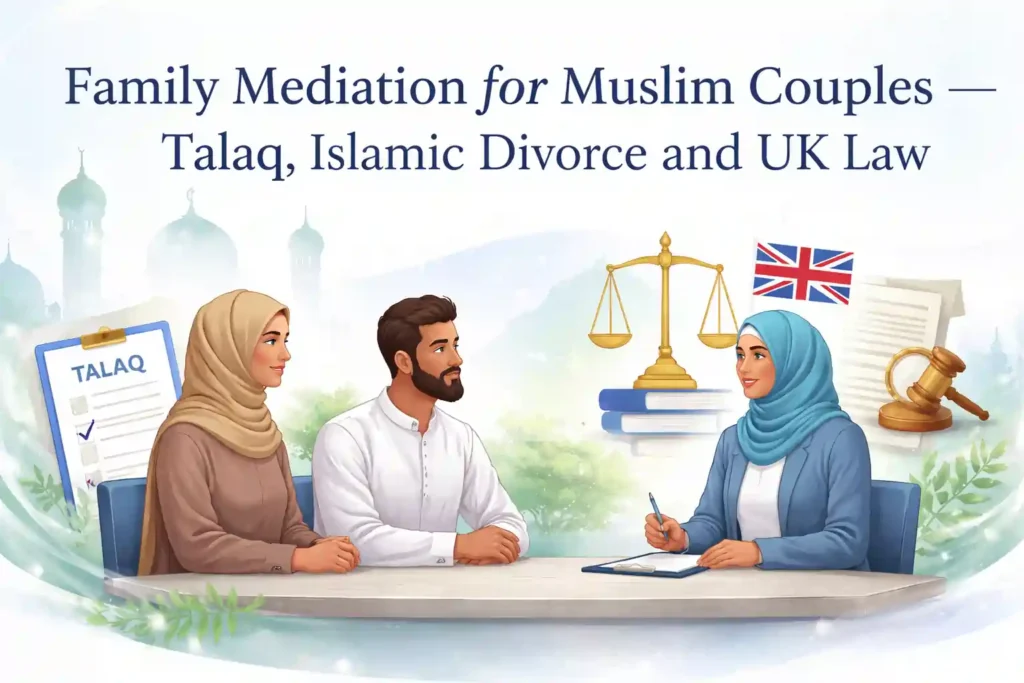
When Muslim couples in the UK Yeovil face separation, they often find themselves balancing two systems at the same time: Islamic principles of divorce (Talaq) and UK civil law. This can feel confusing, especially when both systems have different processes and expectations.
Family mediation offers a practical way to bring clarity. Instead of conflict or court battles, both partners sit with a neutral mediator and discuss arrangements in a calm and respectful environment.
At EH Mediation Yeovil, we help couples understand how religious and legal aspects can work alongside each other, so decisions are not made in anger or confusion but with clarity and fairness.
Why Mediation Matters for Muslim Couples in the UK
Separation is never just a legal process—it is deeply emotional, cultural, and sometimes spiritual. For many Muslim couples in the UK Yeovil, there is also pressure to ensure decisions align with Islamic values while still meeting UK legal requirements. See Here: How Family Mediation Can Heal Long-Term Feuds
Mediation matters because it:
- Reduces conflict and emotional stress
- Helps avoid expensive and lengthy court proceedings
- Encourages respectful communication between both parties
- Protects family relationships, especially when children are involved
Instead of each person trying to “win” the situation, mediation focuses on reaching a balanced agreement that both sides can live with.
Understanding Muslim Divorce: Talaq and Islamic Principles
While divorce (Talaq) is allowed in Islam, it is considered to be a serious and thoughtful procedure for ending a marriage, not to be taken lightly. It’s not for rushing or for when you are angry.
Traditionally, Talaq involves:
- A clear intention to separate
- A waiting period (Iddah) that enables reflection and potential reconciliation
- Thinking about fairness to the spouse and children
Based on their cultural and religious background, families may also have different views or interpretations regarding the practice of Talaq.
This variation can leave couples uncertain whether the religious obligations they fulfilled were properly performed.
Mediation allows room for these conversations, so that both parties have a sense of what has been done and what remains to be considered.

UK Family Law and Muslim Divorce
One of the first and most significant things that couples must comprehend is that religious divorce and legal divorce in the UK Yeovil are not the same.
A Talaq pronounced in the context of Islamic law, however is not recognised as a legal dissolution of marriage under UK law and does not grant an automatic right to a divorce; until civil divorce proceedings are concluded through the courts, that marriage will continue to be legally valid. Child-Focused Separation in the UK Yeovil: What Every Parent Needs to Know?
This often results in misinformation, especially when couples think they are already religiously divorced but legally married.
UK family law covers:
- Legal ending of marriage
- Financial division
- Child arrangements
- Property and asset rights
Mediation teaches couples how both systems intertwine to help ensure things are not dropped through the cracks and that all responsibilities are covered.

How Mediation Helps Muslim Couples
The talaq is sometimes misperceived or disputed between spouses, particularly when feelings are strong or communication has deteriorated.
Mediation helps to slow down and motivate both sides to:
- Describe their view of the situation
- Clarify intentions and expectations
- Address emotional and practical concerns
This process often helps couples create “middle ground” — if they’re not reconciling, at least they can separate without creating needless harm or resentment.
The aim is not to dispute religious decisions but to enable clearer discussion surrounding them.
Talaq and Mediation: Finding Common Ground
Talaq can sometimes be misunderstood or become a point of disagreement between spouses, especially when emotions are high or communication has broken down. Crafting an Enforceable Mediation Agreement Yeovil: Key Elements You Must Know
Mediation helps slow things down and encourages both parties to:
- Explain their understanding of the situation
- Clarify intentions and expectations
- Address emotional and practical concerns
This process often helps couples find “middle ground”—even if they are not reconciling, they can still separate in a way that avoids unnecessary harm or resentment.
The goal is not to interfere with religious decisions but to support clearer communication around them.
Child Arrangements in Muslim Divorce Cases
Children tend to be the most sensitive aspect of any separation. In Muslim families, all parents want to make sure arrangements are made with both the child’s wellbeing and Islamic values in mind.
With mediation, the parents can reach agreements regarding:
- Where children will live
- How much time do they spend with each parent
- Schooling and education choices
- Religious upbringing and cultural identity
Unlike in court, mediation lets parents actually craft these arrangements themselves rather than have one imposed. Manipulation in Family Mediation Yeovil: Legal Insights and Strategies for Success
Financial Settlements and Property Division
Finances become complicated during separation, and emotions cloud judgment.
Mediation offers a neutral space to do that:
- Division of property and assets
- Savings and debts
- Ongoing financial support
- Housing arrangements
In case of Muslim couples, matters like Mahr (dower) or other religious financial obligations may also need to be taken into consideration. These are things that should be openly discussed so that the expectations for both parties are clear.
The goal is fairness and transparency, not competition or punishment.

When Mediation May Not Be Suitable
Although mediation can be helpful in many circumstances, there are times when it is not the right option. Overcoming Challenges in Enforcing Mediation Agreements: Essential Insights and Strategies
It may not be suitable if:
- There is domestic violence or a safety threat
- Or, one party is being coerced or frightened
- However, you want objectively honest engagement.
- Immediate court protection is required
In these situations, it is more appropriate to utilize the law to protect both safety and consumption fairness.
For EH Mediation Yeovil, safety is always a priority, and we will never tell you mediation is the route for you if it is not.
FAQs
Q1: If I have had a Talaq, do I need to still go through a UK divorce?
Yes. In the UK Yeovil, a Talaq does not legally end the marriage. While a religious divorce may have taken place, a UK court order from the civil court system is required to terminate the marriage in accordance with statute law.
Q2: Can mediation work for both Islamic and legal divorce Yeovil?
Yes. Mediation can offer couples advice on their Islamic obligations and the laws of the United Kingdom. It helps forge agreements that honor personal faith, but also ensure everything is practical and legally on record.
Q3: Is mediation confidential?
Yes. Mediation is strictly confidential. What is said in the course of sessions cannot usually be communicated outside the process nor used in a court without a surviving agreement between both parties, or if there are concerns around safety.
Q4: What happens if my spouse is unwilling to mediate?
Mediation is voluntary, so both parties must agree to participate. If one party refuses, mediation cannot proceed — and you may need to look into legal advice or the courts instead.
Q5: Are arrangements for children that need to be made before the court Yeovil?
Yes. For many parents, mediation is the route to an agreement about children. This may also include arrangements regarding where children live, visitation scheduling, holidays, and rules of raising without necessarily involving the courts.
Q6: Will mediation determine who was right and wrong in the relationship?
No, mediation is not about blame or determining who is to blame. It is aimed at assisting individuals to communicate and come to equitable, practical solutions going forward.
For Further Information Please Contact Us